FlyBites
Product, UX/UI, Research
2025
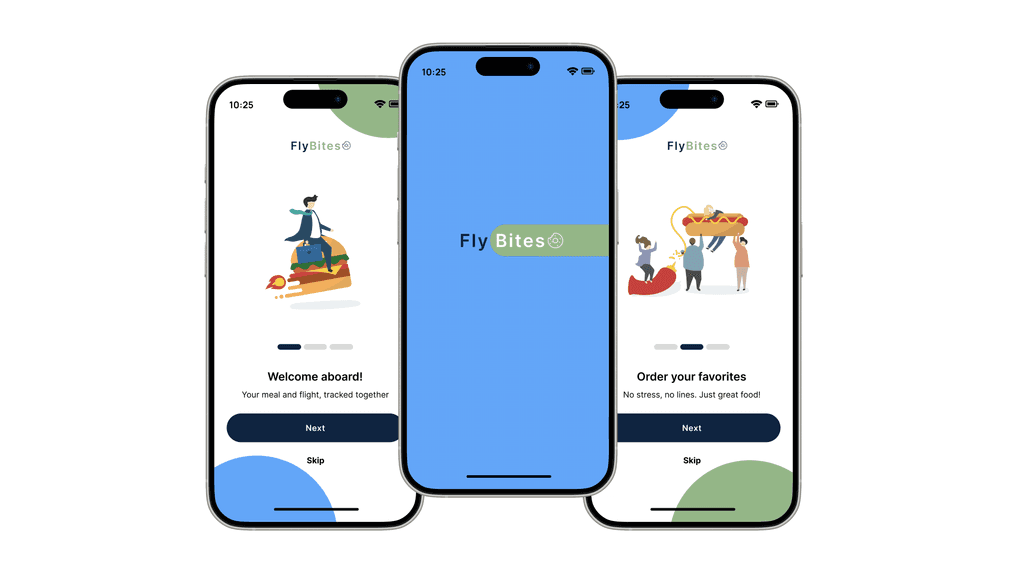
TL; DR —
Air travelers struggle to order food without risking delays or missed flights. FlyBites addresses this issue by integrating real-time flight data with food discovery and ordering so travelers can eat without the stress of missing their boarding call.
How might we help travelers conveniently order food by integrating real-time flight tracking so they can receive their meals on time?
The Design Process
Research →
Finding insights and validating design assumptions became the foundation of our project. We began by asking: given the time pressure and uncertainty travelers face in airports, how do people currently manage food ordering and where does friction remain? Through interviews and competitive analysis, we identified gaps in how existing food and travel apps account for rigid flight constraints and situational stress.
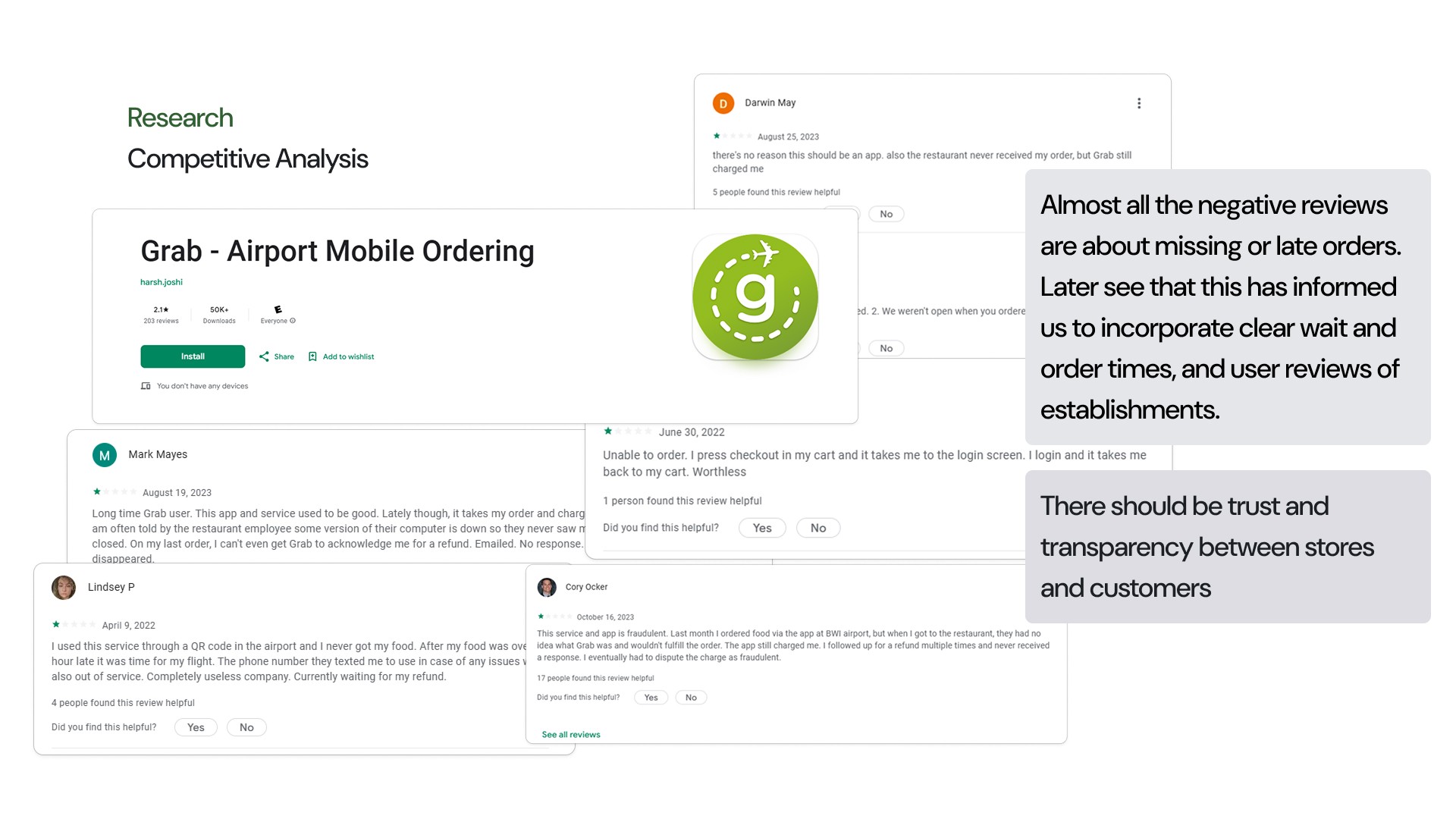
Our interviews with food workers and travelers, and competitive analysis pointed to three things that kept coming up:
A Flight & Food Integrated Experience
Food and flight information usually live in separate apps, but travelers need them together. FlyBites puts both in one place so travelers are not bouncing between screens while boarding time counts down.
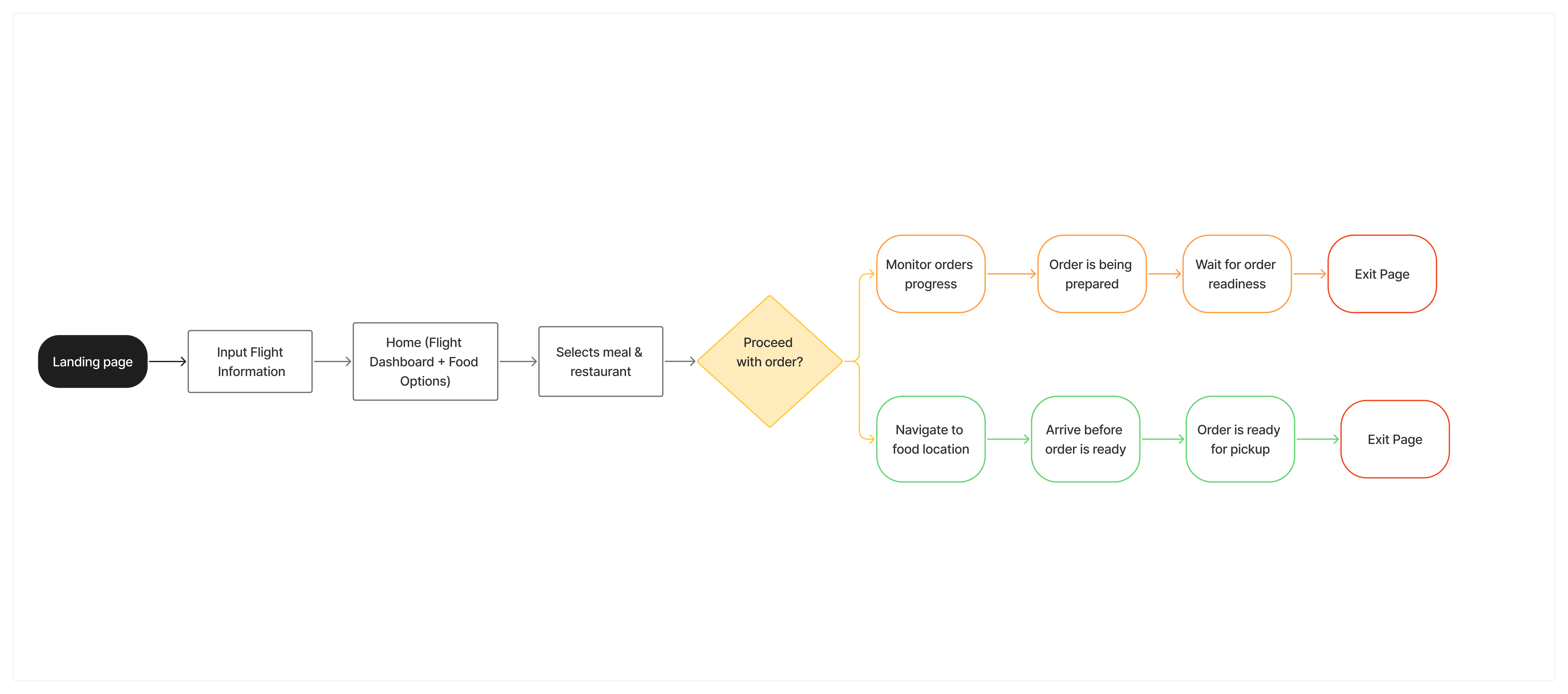
Research →. Ideation →
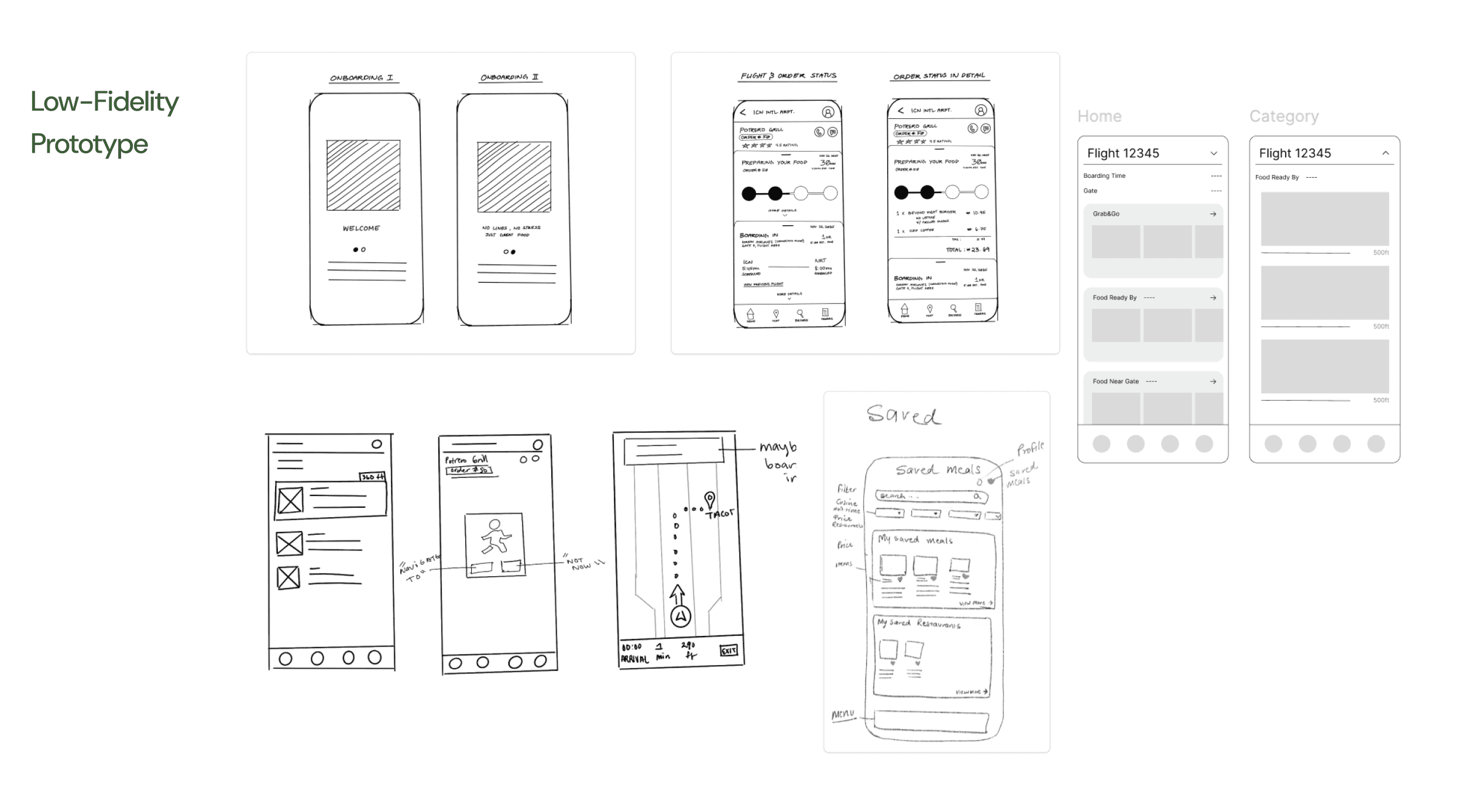
From our research, we created low-fidelity wireframes to figure out what information travelers actually need to see first when they are under pressure. Through iterative refinement, flight details, wait-time filters, and order status were elevated to reduce cognitive load and build trust.
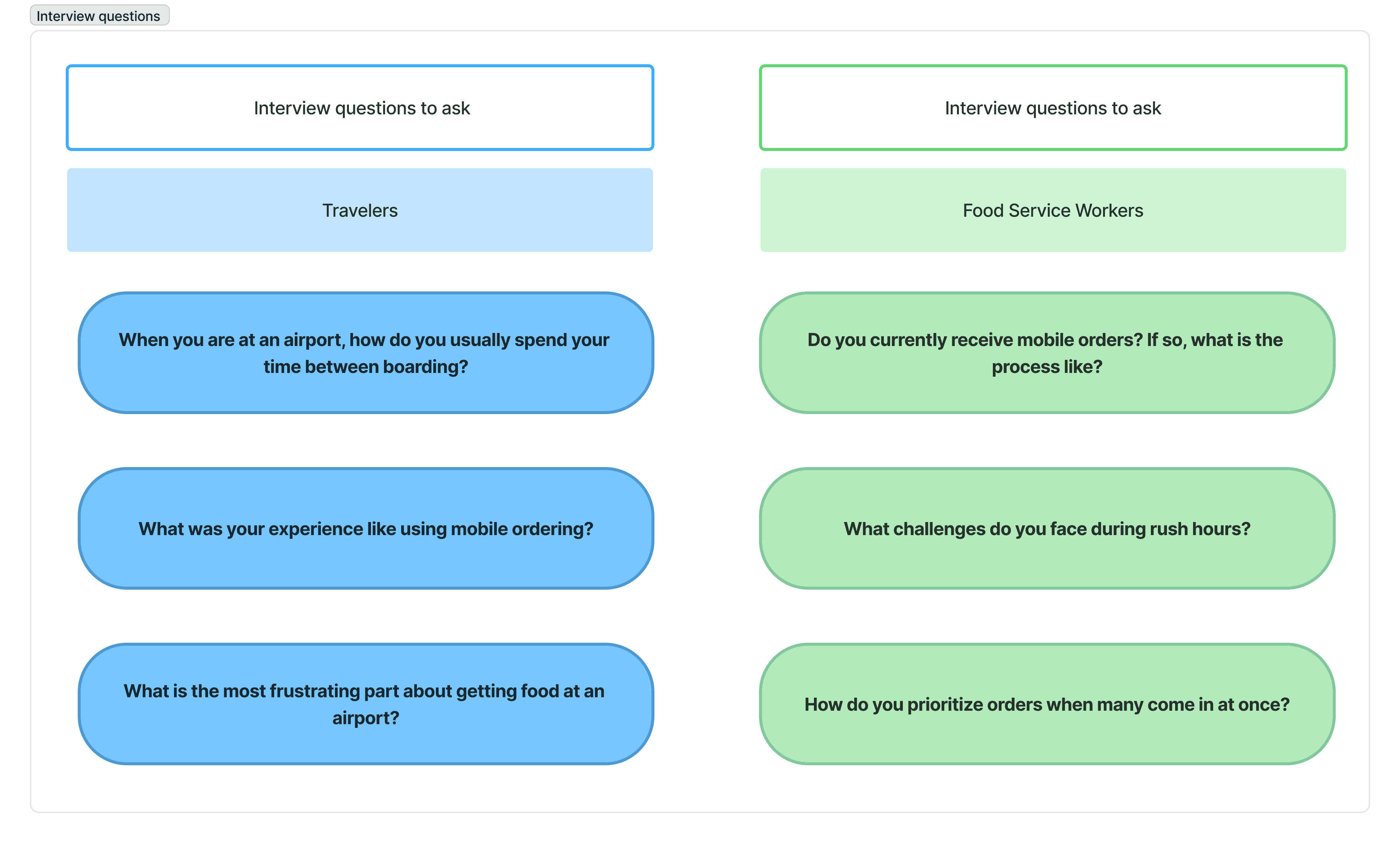
We began with low-fidelity wireframes to map core user flows, including flight information input, food discovery, and order tracking. Early designs focused on information hierarchy which determined what travelers need to see first when under time pressure. In addition, we explored different browsing methods, such as list and map views, to support quick discovery of nearby food options.
Mid-fidelity prototypes were tested within our group to refine layout, remove redundant interaction patterns, and ensure alignment with iOS interaction standards.
I then led a usability study with 28 participants using high-fidelity prototypes, which led to improvements in map readability, accessibility, and menu clarity.
Research → Ideation → Refinement
Polishing the design involved reevaluating each interaction to support travelers under time pressure while aligning with iOS interface standards and considering battery efficiency. Iterative refinements improved information hierarchy, reduced unnecessary background activity, and clarified flight and order status to deliver a reliable, low-friction experience.
Onboarding
A quick, flight-first setup that personalizes the experience and minimizes time spent before browsing food.
Main Menu & Flight-Aware Discovery
Nearby food options and quick meals are prioritized, while a collapsible flight panel keeps boarding information visible throughout the ordering process.
Post-Order — Guided Pickup & Exploration
Users can navigate to their pickup location while monitoring flight status through a color-coded bottom bar. A map directory allows travelers to explore nearby restaurants and place additional orders when time permits.
Let's Reflect
This project pushed me to think more deeply about designing within real-time systems and constraints. Because flight data, food preparation, and pickup timing are tightly connected, small UX decisions had a direct impact on user stress and trust.
Designing FlyBites reinforced how important clarity and timing are when users are making decisions under pressure. It also strengthened my ability to think in systems, aligning flight data, food preparation, and user expectations into a single, coherent flow.
My Takeaway's
Timing as a constraint
When users are under pressure, visibility into timing and status becomes more important than feature depth.
Stakeholder alignment is essential
The experience only works when traveler expectations and vendor workflows are synchronized.
Reducing anxiety is important
Clear status, predictable timing, and confirmation cues can dramatically improve user confidence.